The Origin Story: From Breakfast Tables to a Patented Art Form
Sculpture painting did not begin in an art studio. It began with a practical problem: how to decorate small breakfast tables with a relief that would hold its shape.
Evgenia Ermilova started by decorating breakfast tables in bed, using putty and various plasters to create small reliefs. Over time, she moved from construction materials to artistic acrylic plasters. It became clear that existing materials could not hold high relief or provide the necessary plasticity.
After extensive experimentation, Evgenia developed her own material — a special acrylic paste reinforced with cellulose fibres. This is not plaster of Paris, not gypsum, and not a construction mixture. It is an artistic material designed specifically for three-dimensional painting, holding volume up to 7 cm in a single application without sagging or cracking.
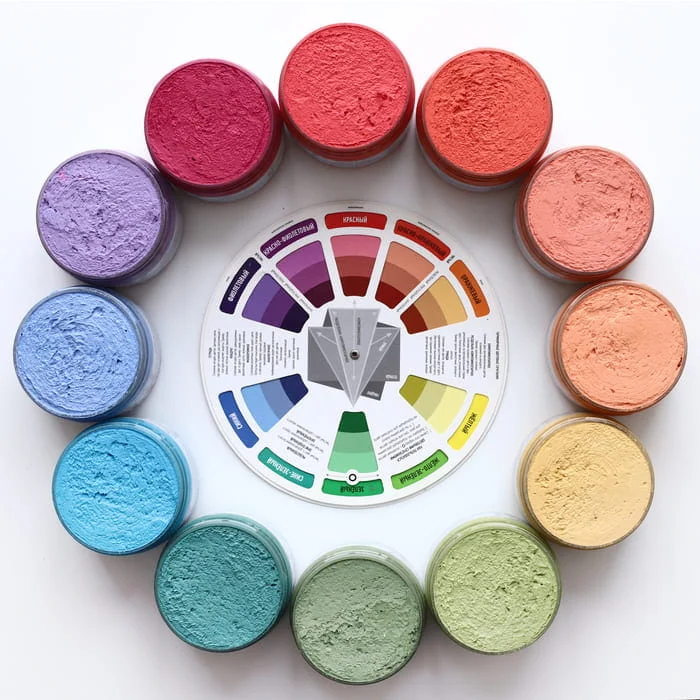
The method was named “sculpture painting” (also known as sculptural painting or volumetric painting). Its core principle is “one smear — one element”: a palette knife picks up coloured paste and, with a single movement, forms a petal, leaf, or curl. Each element is born in the required shade immediately — the paste is not tinted afterwards, but comes in 55+ colours from the start.
In 2015, Evgenia formally established the technique. Today it is protected by Eurasian patent No. 050126 (the technique itself) and No. 051323 (the paste formula). Around the method, she built an entire school — an artistic movement and a teaching system developed in collaboration with professional educators, which practically guarantees results.
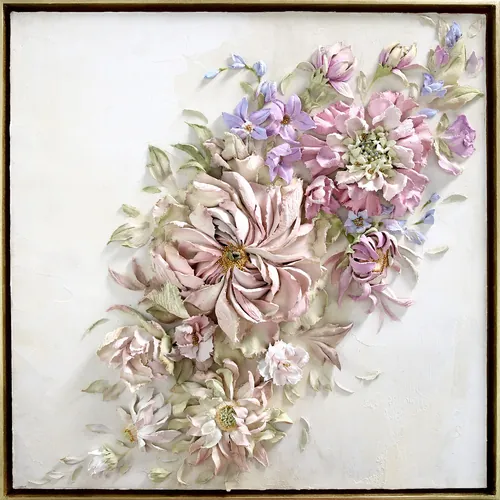
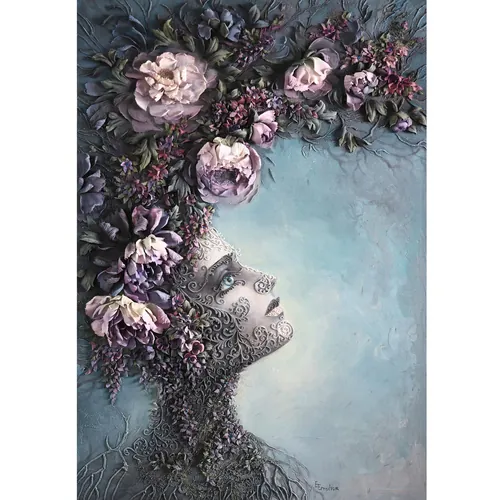
“Azur (Lace)” — an example of openwork relief up to 7 cm high.
How Sculpture Painting Differs from Impasto, Bas-Relief, and Textural Painting
Sculpture painting is often confused with impasto or bas-relief. The differences lie in the material, the height of the relief, and the working principle.
| Property | Sculpture Painting | Impasto | Bas-Relief | Textural Painting |
|---|---|---|---|---|
| Material | Cellulose-reinforced acrylic paste | Oil or acrylic paint | Plaster, stone, wood, or metal | Various texture pastes |
| Relief height | Up to 7 cm in a single application | Typically 1–5 mm | Several centimetres, often more | Usually 1–10 mm |
| Tool | Palette knife (spatula) | Brush or palette knife | Chisel, modelling tools | Palette knife, brush, stencil |
| Colour & form | Created simultaneously — one smear, one element | Form first, colour adjustable | Form first, colour afterwards | Form and colour often separate |
| Typical subject | Flowers, botanical studies, jewellery | Landscapes, portraits, still life | Architectural decoration | Abstract compositions |
| Patent / school | Patented technique (Eurasian patent No. 050126); international school | No single patent | Traditional craft | No single patent |
Why Sculpture Painting Works
Low barrier — high impact
You don't need to know how to draw. Students without any artistic background create volumetric flowers from the very first lesson, yet the result looks like a complex sculpture.
Volume up to 7 cm — a tangible object
The painting stops being a flat image and becomes an object in the interior. It catches light and shadow — for gifts, sales, and decor.
Patented technique and a real school
The technique and materials are protected by patents. The school follows the Keller Plan (PSI): homework is checked personally, and the next topic opens only after a pass.
Forgiving of background, demanding of discipline
The PSI methodology is not "watch a video and forget." It is a system that guarantees a skill, not a collection of watched lessons.
More than a hobby
Students sell their work, take commissions, teach workshops, and become distributors. The school has cases of first sales during training.
A tactile, "slow" practice
Working with paste and a palette knife is a grounding activity. It reduces anxiety and gives a sense of control over the material.
Who Is Sculpture Painting For?
Complete beginners
You want to try "real" art without fear. No drawing skills required. The first volumetric flower can be created on day one.
Start with a beginner course →Practising artists
You work with oil, acrylic, or texture art and want to add volume and tactility to your visual language.
Expand your technique →Interior designers & decorators
You need custom objects for projects — panels, mirrors, clocks, or vases with sculpted florals.
Explore materials for interiors →Creative entrepreneurs
You want to monetise your skill: sell artwork, teach workshops, or become a distributor of the materials.
Learn about partnership →Future instructors
You want to get certified and teach sculpture painting yourself, with the legitimacy of a patented technique.
Become a certified instructor →Those seeking a "slow" hobby
You want to unwind, switch off, and work with your hands. The process matters more than the result.
Try a mindful art practice →What You Can Create with Sculpture Painting
The technique is not limited to flowers on canvas. Here is what artists make with it — see examples in the gallery below.
Panels and paintings
From miniatures to large interior works — floral compositions, botanical studies, abstract reliefs.
Floral compositions
Realistic buds, bouquets, and single stems with petals that truly emerge from the surface.
Interior objects
Clocks, mirrors, vases, boxes, and decorative trays with sculpted elements.
Jewellery
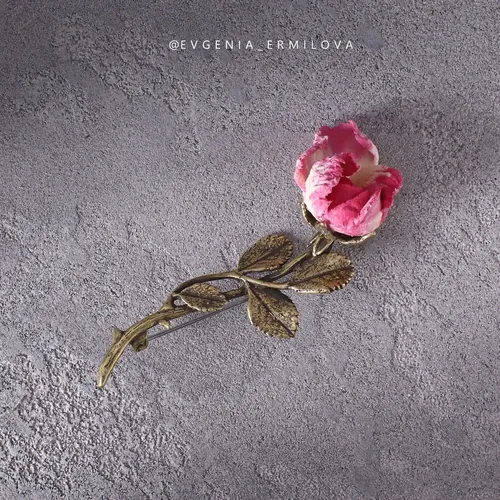
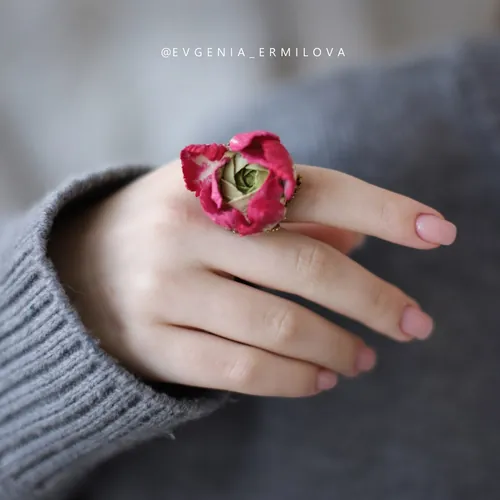
Brooches, rings, pendants, and earrings — wearable art that blooms on your finger or lapel.
Abstract reliefs
Textured compositions without figurative elements, playing with light and shadow.
Mixed techniques
Combine sculpture painting with impasto, pointillism, decoupage, or gilding.
Furniture and decor
Paint table tops, cabinet fronts, and frames — historically the first application of the technique.
Selected Works by Evgenia
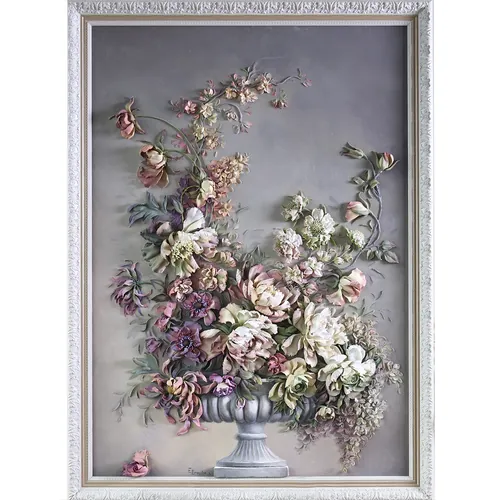
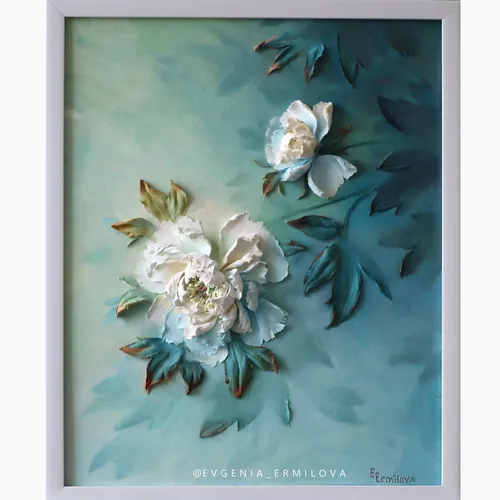
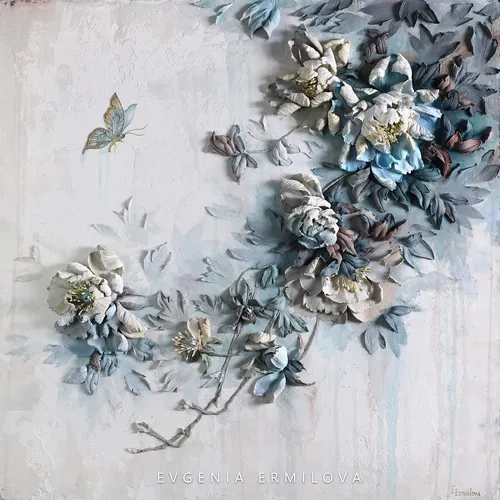
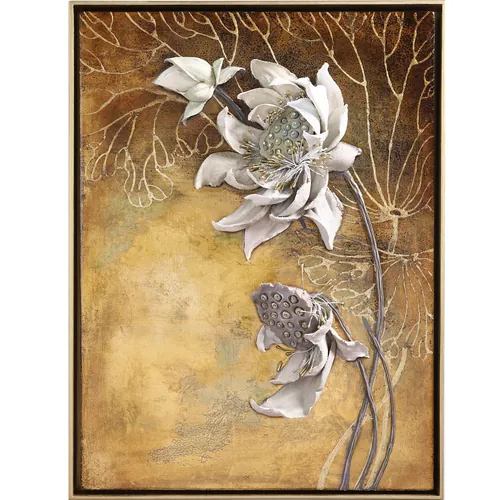
Original paintings and jewellery created in the sculpture painting technique — from high-relief floral panels to wearable art.
How to Start with Sculpture Painting
Choose a course
Select a beginner-friendly online course from the Evgenia Ermilova School. No drawing skills are required.
Browse courses →Get materials
Order the patented texture paste, palette knives, and a starter kit from the official catalog.
Shop materials →Paint your first flower
Follow the step-by-step lessons and create your first volumetric flower using the "one smear — one element" principle.
Start learning →
Learning Path with the Author
Master sculpture painting from A to Z. The school uses the Keller Plan (PSI): each lesson ends with a practical assignment, and the next topic opens only after the homework is checked personally by Evgenia.
- Basic Course "Sculpture Painting" — the foundation
- Professional Artist Club — advanced techniques
- Mini-courses on individual flowers and jewellery
Over 7,000 students worldwide have already mastered the method through licensed educational programs. A certificate is issued upon completion.
See All CoursesPress & Recognition
Sculpture painting has been covered by international media since 2019 — including two features in Daphne's Diary, a magazine distributed across the EU and the US.
"When paintings escape"
The Hindu · 2019"Painted in a sculpture"
The New Indian Express · 2020"Russian connection"
Pune Mirror · 2019Feature on Evgenia's technique
Daphne's Diary · Issue 1/2019Second feature on Evgenia's work and the sculpture painting technique
Daphne's Diary · December 2023 issueMaterials & Tools
The core material is a cellulose-reinforced acrylic paste, available in 55+ colours. It holds volume up to 7 cm in a single application. The formula is protected by Eurasian patent No. 051323.
- Texture pastes in jars and tubes (55+ shades)
- Palette knives (ergonomic, flexible stainless steel)
- Starter kits for beginners
Frequently Asked Questions
Ready to Create Volume?
Start with a beginner-friendly course or explore the patented materials. No drawing skills required.